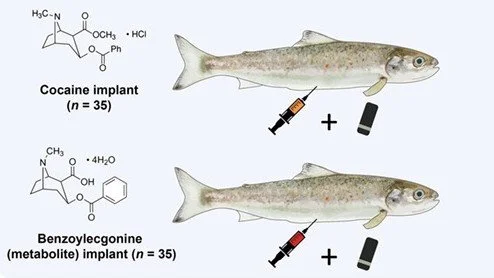
Researchers in Sweden dosed dozens of salmon with cocaine and a cocaine derivative, then set them loose on Lake Vättern to see how they behave when hopped up. Their study appears in Current Biology.

Welcome to my blog.
All in Animal Behavior
Researchers in Sweden dosed dozens of salmon with cocaine and a cocaine derivative, then set them loose on Lake Vättern to see how they behave when hopped up. Their study appears in Current Biology.
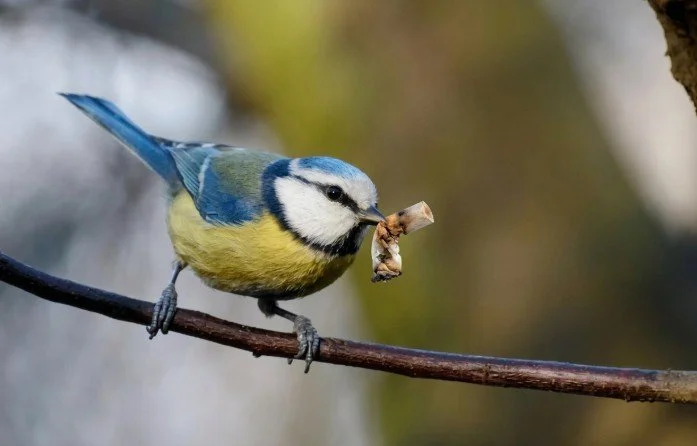
Researchers have known for years that some birds use discarded cigarette butts to build nests. A new study has compiled evidence to show what’s behind this behavior: the butts keep parasites at bay.
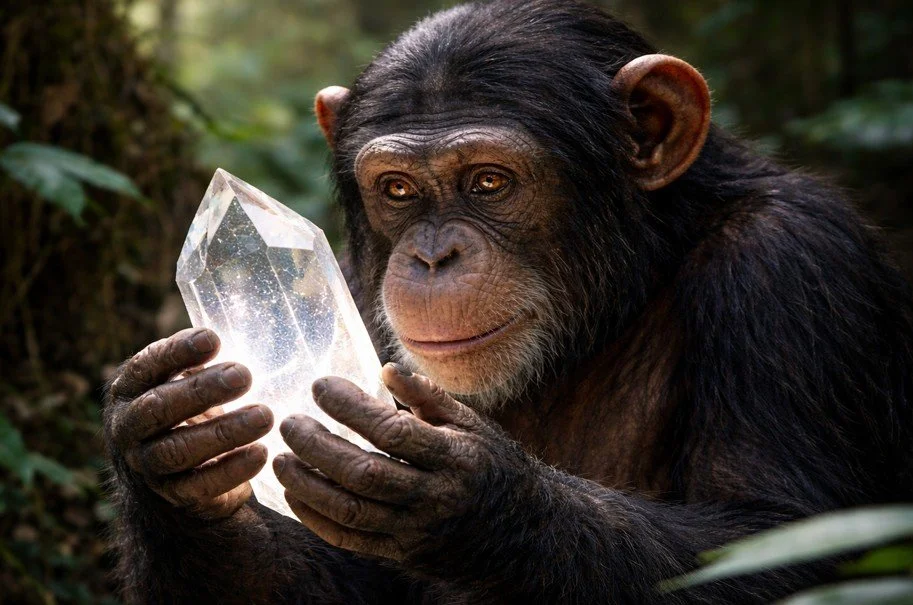
A crystallographer in Spain wondered what would happen if chimpanzees were shown crystals of various shapes and sizes. The results were surprising, and Juan Manuel García-Ruiz of the Donostia International Physics Center believes the findings reveal something about our own ancestry.
A wolfdog named Nazgul crashed the Olympics last week when he escaped his enclosure and chased down a pair of skiers just as they crossed the finish line. Nazgul had slipped out of his indoor kennel, then squeezed past the eight-foot-tall fence separating him from Olympic glory, then dashed into the race.
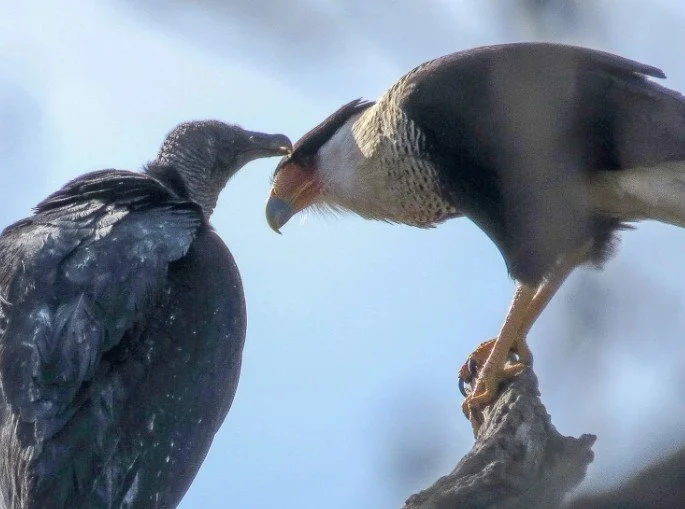
It is exceedingly rare to see birds of different species socializing, but birders will occasionally witness interspecies preening, in which one species grooms another, usually picking at parasites in the process. Now ornithologists are trying to explain the unusual behavior.
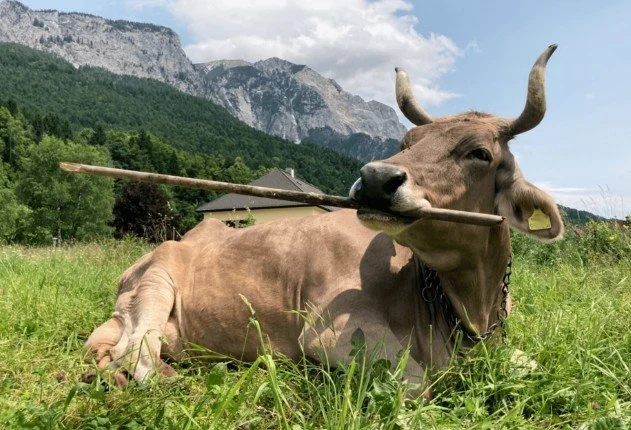
Veronika is a 13-year-old Swiss brown cow living with the Wiegele family in the mountain village of Nötsch in southern Austria. When she was about two years old, her owners noticed she would sometimes grab a stick in her mouth and use it to scratch her body.
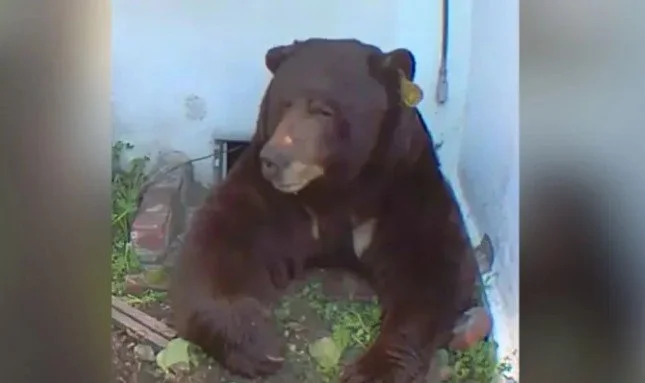
A 550-pound black bear has been living under a house in Altadena, California for over a month, much to the dismay of a terrified homeowner. Ken Johnson says he might sue the state’s Department of Fish and Wildlife, which he claims hasn’t done enough to remove the big beast.
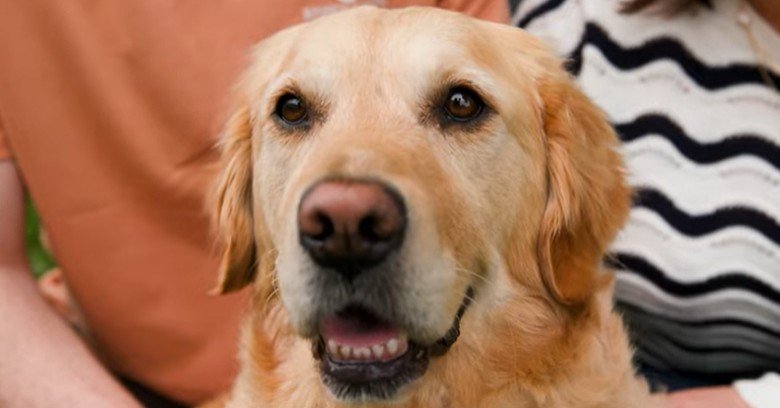
A vigilant golden retriever named Polly noticed something was off with her owner, Adam Cooke of Ireland, as he slept. Cooke was breathing strangely, which got Polly to bark until Cooke’s wife, Hannah, awoke to find her husband’s labored breathing. Then he stopped breathing altogether.
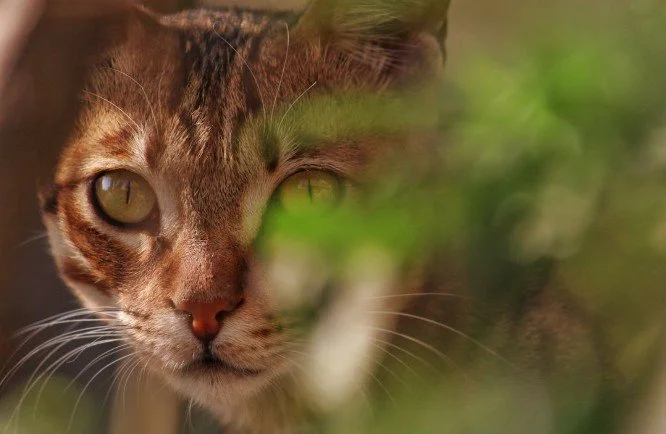
It has long been thought that cats began to bond with humans around 10,000 years ago and that our love affair with felines arose in the same part of the world, the Levant. New research is upending both of those notions.
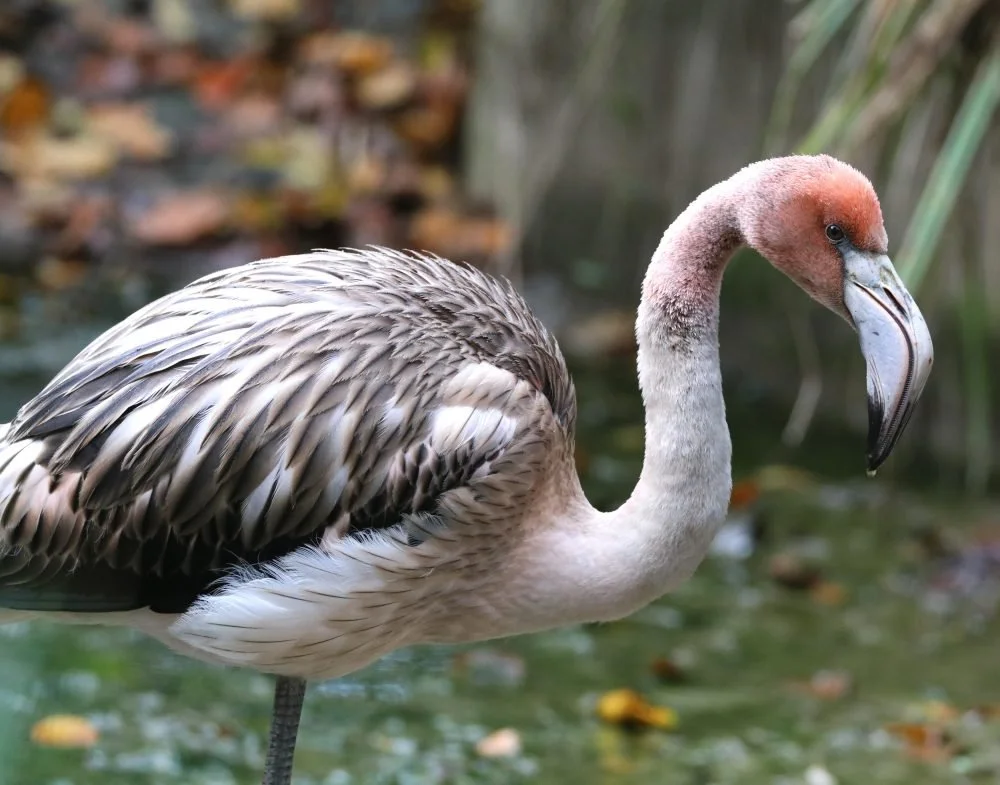
On a windy Sunday morning in Cornwall, a young flamingo took flight from a local sanctuary. By the following day, she had crossed the Channel and arrived on Île Aganton along the north coast of France, 130 miles from where she began.
This month Japan deployed troops to fend off bear attacks in the northern prefecture of Akita. Bears have gone a bit nuts here this year, killing at least a dozen people since April and injuring more than 100.
The endangered Siberian tiger, also known as the Amur tiger, is rarely seen in the wild, but this year the world’s largest big cat is making unwelcome appearances in Russia’s far east. The tigers are preying on dogs, livestock, and in a few cases, humans.
Raccoons love to live near humans, especially in urban environments where there happens to be lots of food (trash). Researchers from the University of Arkansas at Little Rock have observed subtle anatomical changes in these little trash pandas that suggest they are becoming domesticated by spending so much time around us.
A fashion show in Chelsea this week featured a very special kind of fabric: wool harvested from gay sheep. Designer Michael Schmidt teamed up with German sheep farmer Michael Stücke and LGBTQ dating app Grindr to launch a line of knits that have the added benefit of saving the lives of the sheep that produced the wool.
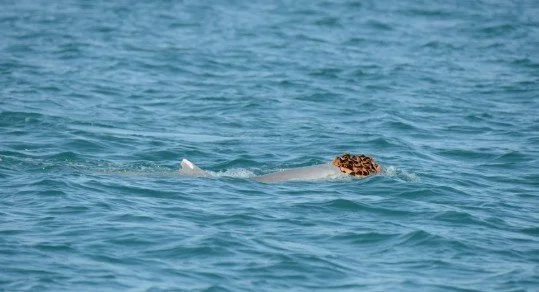
We’ve documented orcas wearing hats made of dead salmon. Now comes another cetacean making a fashion statement: humpback dolphins sporting hats of sponge.
When we last left the sea otter known as Otter 841, the 5-year-old female was harassing surfers off of Santa Cruz, commandeering – and occasionally taking a bite out of – their surfboards. That was two years ago; now she’s back, perhaps.
Earlier this month, the Aquarium of the Pacific announced that its giant Pacific octopus named Ghost had laid a clutch of eggs, but that her days were numbered. She had entered the last stage of her life cycle, senescence, when a female lays eggs that won’t hatch.
Orcas are attacking sailboats off the Iberian Peninsula again, destroying rudders and stranding crews. In August, killer whales tore the rudder off a German boat in the Vigo estuary in Galicia, Spanish newspaper Faro de Vigo reported.
Gorillas are social animals that live in troops, typically headed by a dominant male, along with several adult females and their offspring. Often a female will leave the troop and relocate – a behavior primatologists call “dispersal.” New research shows that the females tend to seek out other females they already know when they join a new troop, upending a long held view that the males are running the show.
A man in Karnataka, India thought it might be fun to take a selfie with a wild elephant off the roadway in the Bandipur Tiger Reserve. It was not. He didn’t get the selfie, but he did get run down by the startled creature and was nearly stomped to death. Plus he lost his pants, briefly.