Coked-Up Salmon Behave Badly Swimming Through Polluted Waters
Researchers in Sweden dosed dozens of salmon with cocaine and a cocaine derivative, then set them loose on Lake Vättern to see how they behave when hopped up. Their study appears in Current Biology.
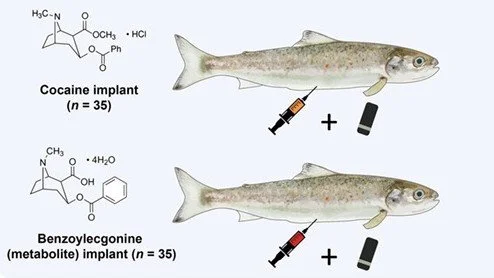
The researchers selected 2-year-old Atlantic salmon from a hatchery in southern Sweden and implanted them with tracking tags and slow-release capsules. Some capsules contained cocaine (roughly equivalent to what they would get in polluted water), others contained benzoylecgonine, a metabolite produced when cocaine breaks down in the body. A third group was left drug-free as a control.
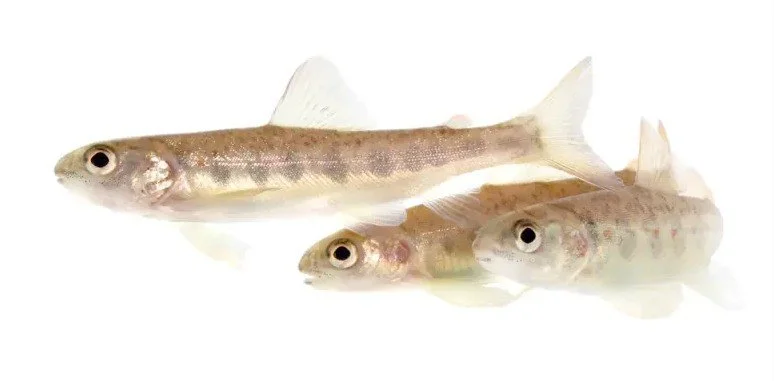
The biologists, from the Swedish University of Agricultural Sciences, expected the coked-up group to swim around more than the undrugged fish, and they did. But the metabolite-infused salmon were a surprise. “Exposed fish were more active, swimming up to 1.9 times further per week and dispersing up to 12.3 kilometers (7.6 miles) further across the lake compared to control fish,” says a university press release, “Interestingly, the metabolite had a greater impact than cocaine itself.”
The upshot is that we’ve been underestimating the ecological effects of breakdown substances like benzoylecgonine, which persists longer in the human body than cocaine and is found at higher concentrations in the environment. Swimming faster and farther is a problem because movement is crucial to how animals use habitats, find food, and avoid predators.
Pollution from illicit drugs like cocaine is increasing, but legal drugs leaking into the ecosystem are a problem too. Trout have been documented to be hooked on methamphetamine, most likely from legit medical sources.Perch have been observed losing their fear of predators because they are consuming second-hand antidepressants.
Some aquatic animals are ingesting both illegal and legal drugs. Freshwater shrimp in rivers in Suffolk, England are literally swimming in drugs, including cocaine, methamphetamine, antidepressants, as well as anti-anxiety and antipsychotic meds. Juvenile chinook salmon in Washington’s Puget Sound are on Prozac, Advil, Benadryl, and Lipitor.
The Swedish team says addressing this worldwide problem will require improved wastewater treatment, more monitoring of both drugs and their breakdown products, and just better ways to assess environmental risks.
Photo credit: Swedish University of Agricultural Sciences