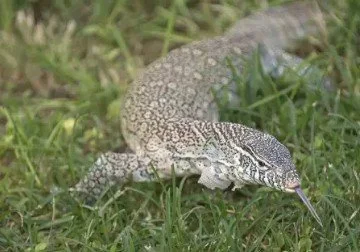
Five-foot Lizards Invade Florida, Threaten Wildlife
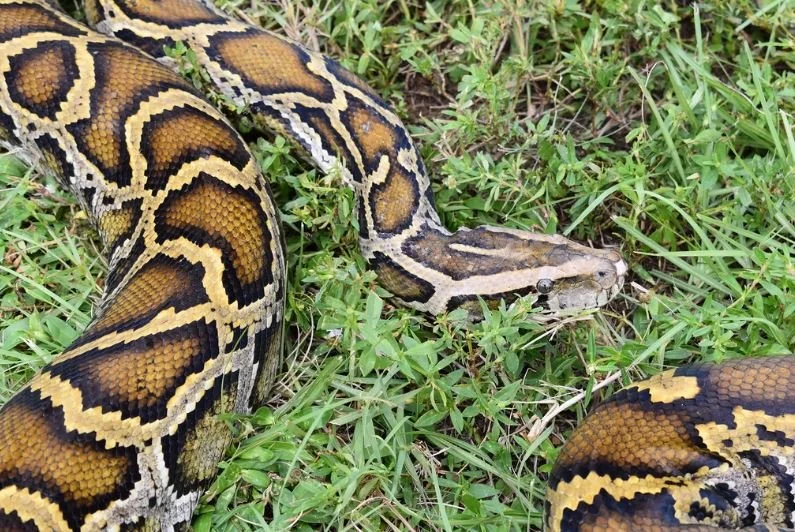
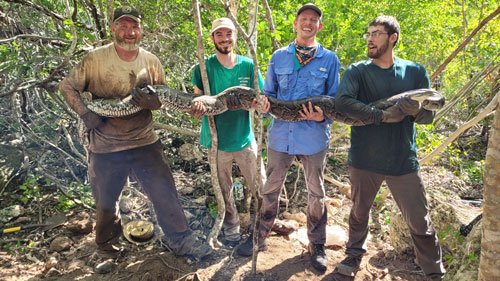
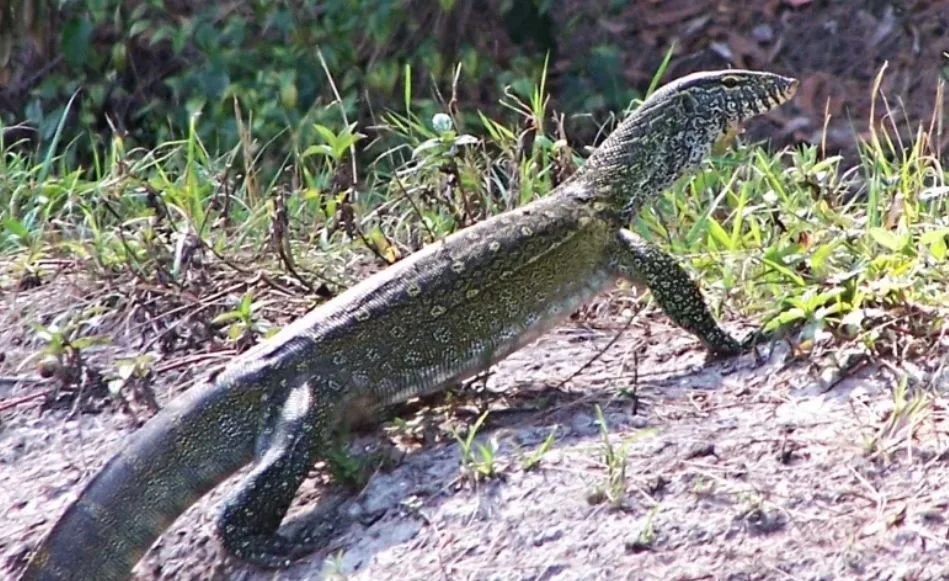
Move over, Burmese python. There’s another invasive species chomping through Florida: the Nile monitor, a big omnivorous lizard naturally found in Sub-Saharan Africa.
Like the invasive python, the Nile monitor has been on the loose in Florida for decades, likely escapees from the exotic pet trade. They can grow to over seven feet long and weigh upwards of 15 pounds, though the adult specimens in Florida are usually closer to five feet in length.
In recent months, wildlife officials and researchers have been warning that monitor populations are expanding in South Florida. Ground Zero is Lee County, particularly in and around Cape Coral, and including the nearby barrier islands.
The beasts are a threat to indigenous species because of their indiscriminate diet. A Nile monitor will eat crabs, crayfish, mussels, other lizards, and fish. They can and do eat young crocodiles and other reptiles, birds and their eggs, and small mammals – such as cats. (If only they preyed on Burmese pythons.)
Add to that yummy selection state- and federally-listed protected species including sea turtles, wading birds, gopher tortoises, and the American crocodile.
It’s odd that Nile monitors ever found a foothold in the exotic-pet trade in the first place, since they make such notoriously terrible pets.
As Daniel Bennett writes in Monitor Lizards: Natural History, Biology & Husbandry: “Very few of the people who buy brightly-coloured baby Nile monitors can be aware that, within a couple of years, their purchase will have turned into an enormous, ferocious carnivore, quite capable of breaking the family cat’s neck with a single snap and swallowing it whole.”
The FWCC has set up an Exotic Pet Amnesty Program for people who want to part company with their fork-tongued companions.If you see one in the wild (or in your backyard), the Commission wants you to report it rather than try to trap it yourself. There’s an app for that, of course; or you can call 888-IVEGOT1 (483-4681).
Photo credit: Florida Fish and Wildlife Conservation Commission