No more Spezzatino Di Cavallo for Italian Foodies?
Italy might ban horsemeat soon as its legislature redefines equine animals – horses, donkeys, and mules – as pets, prohibiting their slaughter and use for food. If approved, the new law would impose jail terms of up to three years and fines of up to €100,000 ($120,000 USD) for the slaughter of equines.
The bill was drafted by Michela Vittoria Brambilla, a member of Giorgia Meloni’s ruling coalition, and it has the support of opposition parties.
“While in the Anglo-Saxon world, eating horses is almost unthinkable, in our country the species is literally exploited to the bone,” Brambilla told la Republica. “Despite its decline, Italy is one of the largest consumers of horsemeat among major European countries. But friends are not to be eaten.”
Horse meat has traditionally been part of Italian cuisine, in the south in Puglia, Campania, and Sicily; in the north in Lombardy and Veneto. Consumption has declined in recent years, but Italy is still one of the largest importers of horsemeat in Europe. In a recent survey 83% of Italians said they did not eat horse meat; 17% said they ate it at least once a month. The most popular dish is probably pastissada de caval, a slow-cooked horse meat and onion stew, typically served with polenta.
The new law includes provisions for mandatory microchipping of equines to keep track of every animal – that is, every pet. It also would set aside €6 million ($7 million USD) to help breeders transition out of the horsemeat trade.
The proposed legislation is getting some pushback. Gianmarco Centinaio, vice-president of the senate and former minister of agriculture, defends the cultural importance of horsemeat. “Banning the consumption of horse meat would mean deleting a piece of the history of Italian cuisine and also of the identity of some territories,” Centinaio told Sole 24 Ore.
Interestingly, Italian cuisine was recently officially recognized by UNESCO as an “Intangible Cultural Heritage of Humanity” — the first time a national cuisine has received the honor. Now that cultural heritage will likely have to carry on without horsemeat on the table. The new legislation will grind through the Italian parliament in the coming months.
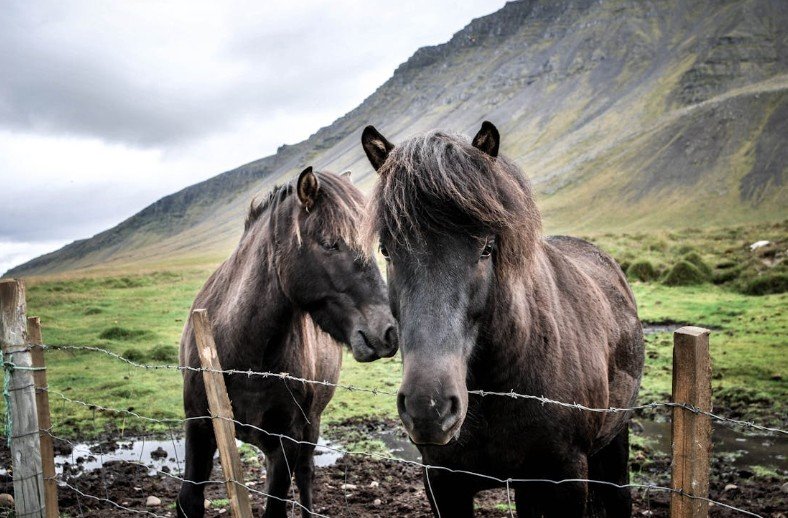
Photo credit: Tiana / Pexels